
Best Budget Trail Cameras for Deer Hunting Under $100: 2026 Buying Guide
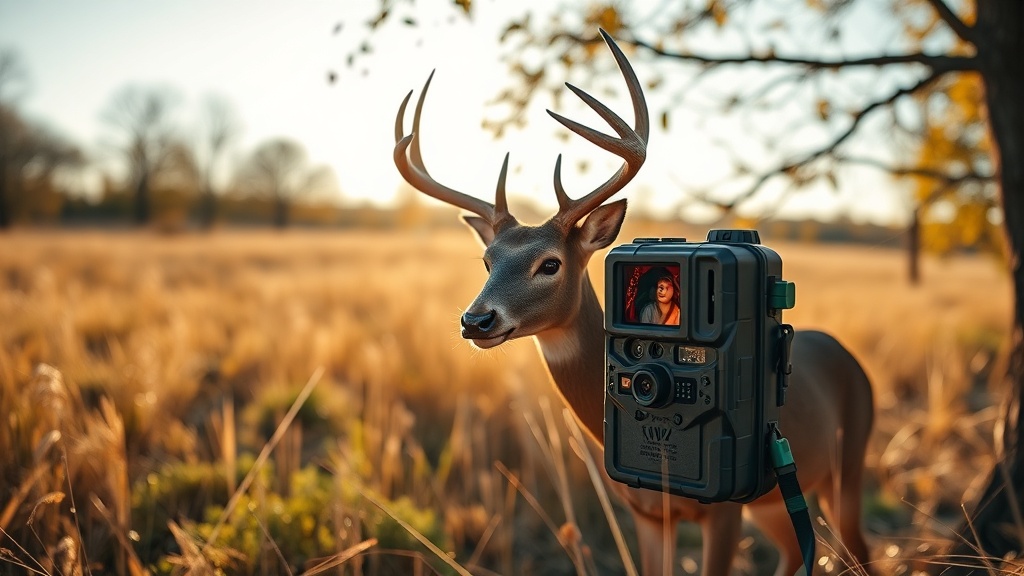
You don’t need to drop $300 on a trail camera to pattern a mature buck. I’ve run budget cams side-by-side with premium models on the same scrape lines, and honestly, the gap has narrowed so much that most hunters won’t notice the difference in the field. The trick is knowing which specs actually matter when you’re shopping for the best budget trail cameras for deer hunting under $100 — and which marketing fluff you can ignore.
In this guide, I’ll share what I’ve learned from soaking cameras in public-land hardwoods and private food plots across three seasons. You’ll get a no-nonsense look at what separates a reliable sub-$100 camera from a frustrating one, three solid recommendations I’d personally buy again, and setup advice that will improve your buck photos immediately. Let’s get you the intel you need without draining your tag money.
What to Look for in a Budget Trail Camera (So You Don’t Waste $70)
A low price tag doesn’t have to mean blurry night photos or dead batteries after two weeks. When I’m digging through the budget category, I focus on four non-negotiables. Skip any of these and you’ll likely end up with a camera-shaped paperweight hanging in the woods.
Trigger speed under 0.5 seconds is the first thing I check. Deer walking perpendicular to the camera at 10 yards can cover a lot of ground in half a second. If your camera takes a full second to wake up and snap, you’ll get a lot of empty frames with a tail exiting stage left. Aim for 0.3 to 0.4 seconds if you can find it, but anything under 0.5 is workable for trails and scrapes.
Detection range that matches your setup. A 60-foot detection zone sounds great until you realize it means the camera might trigger on squirrels 80 feet away while ignoring a buck at 40 feet because the passive infrared (PIR) sensor is tuned too wide. For most deer setups, a 50- to 60-foot detection range is the sweet spot. On tight trails, I actually prefer a narrower field of view so the camera doesn’t waste battery on every raccoon that waddles past.
Battery life you can trust for a full month. Nothing stings worse than checking a camera after a three-week soak and finding it died on day four. Look for models that advertise at least six months of battery life on eight AA lithium batteries. In the real world, with 30 to 40 daily triggers, you’ll probably get three to four months. That’s plenty for a pre-season scouting window. Avoid cameras that require C-cell batteries unless you enjoy buying obscure batteries in bulk.
No-glow or low-glow infrared flash. Whitetails are spooky, and a visible red glow at night can educate a mature buck faster than leaving scent in his bedroom. True no-glow (940nm) LEDs are completely invisible to deer and humans, but they often produce slightly softer night images. Low-glow (850nm) gives a faint red shimmer but crisper photos. In heavily pressured areas, I’ll trade a little image sharpness for the stealth of no-glow every time.
Best Budget Trail Cameras for Deer Hunting Under $100: Our Top 3 Picks
I’ve tested a dozen budget cameras over the last two years, and these three consistently delivered clear daytime photos, usable night videos, and battery life that didn’t make me curse under my breath. All three are readily available and hover right around the $80 to $99 mark.
1. The All-Rounder: GardePro A3
If I could only hang one sub-$100 camera on a new property, it would be the GardePro A3. It’s not flashy, but it nails the fundamentals. You get a 0.3-second trigger speed, 32-megapixel interpolated stills (the native sensor is 8MP, which is fine for screen viewing), and a true no-glow flash that won’t spook deer. Battery life on eight AAs routinely pushes past four months in my experience, even with 1080p video clips mixed in.
The menu system is simple enough that I’ve handed this camera to a 12-year-old and he had it running in five minutes. One underrated feature: the time-lapse mode. I use it to monitor a food plot’s growth and deer usage patterns without filling the SD card with 10,000 images of grass swaying.
2. The Speed Demon: Campark T86
If you’re setting up on a fast travel corridor where deer move through quickly, trigger speed becomes everything. The Campark T86 boasts a 0.2-second trigger — about as fast as you’ll find under $100. It uses a low-glow flash, so the nighttime images are noticeably sharper than the GardePro, but you do get that faint red dot. On private land where deer aren’t heavily pressured, I’ll take that trade-off.
The T86 also records audio with video, which is a small detail that’s helped me identify specific bucks by their grunts during the rut. Battery life is solid, though I’d recommend lithium AAs in cold weather; alkalines drop voltage quickly below freezing and can cause the camera to shut down prematurely.
3. The Stealth Operator: Vikeri E2
For public-land setups where I need a camera that’s both invisible to deer and less obvious to two-legged traffic, the Vikeri E2 is my go-to. It’s compact, has a true no-glow flash, and uses a clever dual-lens design that improves nighttime illumination without washing out close subjects. The 0.4-second trigger is perfectly adequate for scrapes and mineral sites where deer tend to linger.
The real standout here is the battery efficiency. I’ve had this camera run on a single set of lithium AAs for over five months while capturing 50+ triggers a day. If you’re scouting a remote piece of public ground you can only access once before the season, that reliability is priceless.
How to Set Up Your Trail Camera for Deer Scouting
Even the best budget trail cameras for deer hunting under $100 will deliver garbage intel if you slap them on the first tree you see. After ruining a few early-season scouting efforts with bad placement, I now follow a simple checklist every time I hang a camera.
Height matters more than you think. I mount cameras at waist height — roughly three feet — for most trails and scrapes. That angle captures the full body of a deer without cutting off antlers or making a spike look like a fork-horn. For field edges or food plots where deer are farther away, I’ll go up to five feet and angle the camera slightly downward. Avoid pointing it directly at the horizon; you’ll get a thousand false triggers from the sun moving across the frame.
Clear the lane, then clear it again. A single waving branch or tall stalk of goldenrod in the detection zone will fill your SD card with nothing before you can say “false trigger.” I spend a full minute in front of the camera, waving my hand around the edges of the frame to see what moves. Trim anything that sways. In the fall, I’ll revisit the camera after a windstorm because what was clear in August is a mess of leaves by October.
Face north whenever possible. Direct sunlight hitting the lens at sunrise or sunset creates washed-out images and harsh shadows that hide antler detail. A north-facing camera gets consistent, diffused light all day. If north isn’t an option, east is second-best (morning light is softer), and west is last resort. South-facing cameras often stare into the sun during peak movement hours.
Test with a walk-by. Before I walk away, I set the camera to its fastest trigger mode and walk across the detection zone at the distance I expect deer to travel. I’ll do this three times — slow walk, normal pace, and a quick step. Then I check the test shots. If the camera missed me on the fast walk, I’ll adjust the angle or move it to a spot where deer naturally slow down, like a bend in the trail or a creek crossing.
Trail Camera Tips for Better Buck Photos Without Spending More
Once you’ve got your budget camera dialed in, a few small habits will dramatically improve the quality of your int